Lightning protection for buildings and structures: professional installation and design
Lightning is one of the most dangerous natural phenomena, which can cause fires, electrical equipment failure and significant financial losses. A lightning protection system for a house or business is a complex engineering structure that protects people and property from the effects of lightning strikes.
What modern lightning protection includes:
- Lightning rods to intercept the discharge;
- Current conductors for safe dissipation of electrical charge;
- A grounding circuit for effective energy dissipation;
- Protection against impulse surges for electrical networks and equipment.
- Why it is important to install a lightning protection system:
- Protection of buildings and electrical appliances from lightning strikes;
- Preserving the life and safety of residents or employees;
- Compliance with state building codes and safety standards;
- Reliability and durability of the system with minimal maintenance.
Types of lightning protection systems
There are several types of systems, which are classified according to their principle of operation, method of installation and scope of application. Let's look at the main ones.
1. External lightning protection
This is the most common type, installed on building roofs, masts, pipes, etc. It consists of three main elements:
Lightning rods
There are three types:
- Rod — metal rods fixed vertically to the building;
- Cable — steel cables stretched over the object;
- Mesh — metal mesh laid on the roof surface.
Conductors
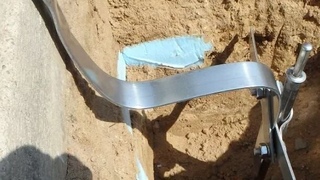
Steel or copper wires that connect the lightning rod to the grounding device.
Grounding devices
Elements that dissipate electrical charge into the ground. They can be vertical, horizontal or combined.
External protection prevents direct lightning strikes to the building.
2. Internal lightning protection
Designed to protect electronic and electrical equipment from surges caused by lightning. Usually implemented using surge protection devices (SPD).
Main elements:
- SPDs are installed in electrical panels;
- Cable shielding;
- Protection of engineering networks (Internet, video surveillance, security systems).
- Internal protection is necessary for office centres, server rooms, and production facilities with automated systems.
3. Active lightning protection
This is a modern system that uses an active lightning rod. Its distinctive feature is its ability to create an ionised zone that attracts lightning strikes from a greater distance (up to 100 m).
Advantages:
- fewer lightning rods;
- fewer current conductors;
- ease of installation.
Active systems are particularly effective for large facilities: hangars, stadiums, warehouses, business centres.